Metabolism Boosters: What Evidence Says
Quick Answer: Do Metabolism Boosters Actually Work?
Only modestly. Independent evidence shows the biggest metabolism levers are not pills but your body composition and your plate: protein carries the highest thermic effect of any macronutrient, and added lean muscle raises the calories you burn at rest. Stimulant fat-burners nudge metabolism upward, but the effect is small and short-lived.
- Protein wins: your body spends roughly a quarter of protein's calories just digesting it.
- Muscle is the engine: lean mass burns calories around the clock; pills do not build it for you.
- Supplements are accessories: useful at the edges, never the main lever.
Search “metabolism booster” and you will meet an entire industry built on a single, seductive promise: that a capsule can quietly turn up the dial on the calories your body burns while you carry on as normal. It is a compelling story because metabolism feels invisible and mysterious — something that happens to you rather than something you influence. This article cuts through the marketing to ask a plain question: when you line up the actual evidence, what genuinely raises the number of calories you burn each day, and where does a supplement honestly fit in that picture?
The short version is that the biggest levers are not exotic and not for sale in a bottle. They are protein, muscle and movement. Understanding why reframes the whole category — and makes you a much harder person to sell a false shortcut to.
What a metabolism booster actually promises — and what metabolism really is
Before you can judge a metabolism booster, it helps to know what metabolism is. Your total daily energy expenditure — the calories you burn in twenty-four hours — is made up of four parts. The largest by far is your resting metabolic rate, the energy your body spends staying alive: keeping your heart beating, your brain running, your tissues repairing. For most people that is 60 to 70 percent of the total. Then there is the thermic effect of food, the energy used to digest and process what you eat, at roughly 10 percent. Then deliberate exercise, which is smaller than people assume. And finally non-exercise activity thermogenesis — all the walking, standing, fidgeting and general moving you do without calling it exercise.
When a product says it “boosts metabolism,” it is almost always claiming to raise one of the two smallest and most stimulant-sensitive pieces: the thermic effect of food, or a brief lift in resting rate from caffeine and similar compounds. It is not rebuilding your resting metabolic rate, because that is governed largely by your body size, your organs and your lean tissue — none of which a capsule changes overnight. Keep that distinction in mind and most of the marketing collapses into its true, modest shape.
The thermic effect of food: where protein quietly wins
Here is the finding the supplement aisle would rather you did not dwell on, because you cannot patent it. Not all calories cost the same to digest. Your body spends energy breaking food down and putting it to use, and the size of that tax depends heavily on the macronutrient. Protein is by far the most expensive to process: somewhere between 20 and 30 percent of the calories in a protein-rich food are burned simply handling it. Carbohydrate sits around 5 to 10 percent. Dietary fat is the cheapest to store, at roughly 0 to 3 percent. The Journal of the American College of Nutrition review of the thermic effect of food is the place to check that for yourself.
The practical effect is real and free. Shift a meaningful share of your daily intake toward protein — eggs, fish, poultry, dairy, legumes — and you raise the thermic effect of food, so a slightly larger slice of what you eat is spent in the act of digesting it. Protein does two other useful things at the same time: it is the most satiating macronutrient, which tends to reduce overall intake, and it supplies the raw material your body needs to hold onto muscle while you lose fat. No metabolism-boosting pill on the market matches that combination, because no pill can.
| Macronutrient | Calories spent digesting it | Extra benefits |
|---|---|---|
| Protein | ~20–30% | Most filling; protects lean muscle |
| Carbohydrate | ~5–10% | Fibre-rich forms aid fullness |
| Dietary fat | ~0–3% | Essential fats support hormones |
| “Fat-burner” capsule | Negligible, temporary | Small stimulant lift, fades with tolerance |
Lean muscle is the resting-metabolism lever nobody can sell you
If the thermic effect of food is the free win on your plate, muscle is the free win in your body. Lean mass is metabolically active tissue: it costs energy to maintain even at complete rest. Add muscle through resistance training and you raise your resting metabolic rate, so you burn a little more every hour of every day, asleep or awake. Lose muscle — through crash dieting, inactivity or ageing — and the opposite happens, which is one reason aggressive very-low-calorie diets so often stall and rebound.
That matters most in midlife, when muscle is quietly leaving on its own; the practical version of this argument is in how to lose belly fat over 40. This is precisely the lever that no capsule can pull for you. A metabolism booster cannot contract your muscles or build new tissue; only loading them can. The most durable thing you can do for your metabolism is not swallow anything — it is lift progressively heavier things two or three times a week, eat enough protein to support the tissue, and protect the muscle you already have while you are in a calorie deficit. That is the unglamorous engine behind almost every genuine, lasting result. It also explains why the smartest question is not “which fat-burner is strongest” but AlkaSlim Reviews: An Honest Breakdown — a question the honest answer to is “very little.”

Build the routine, then let a supplement play its supporting role
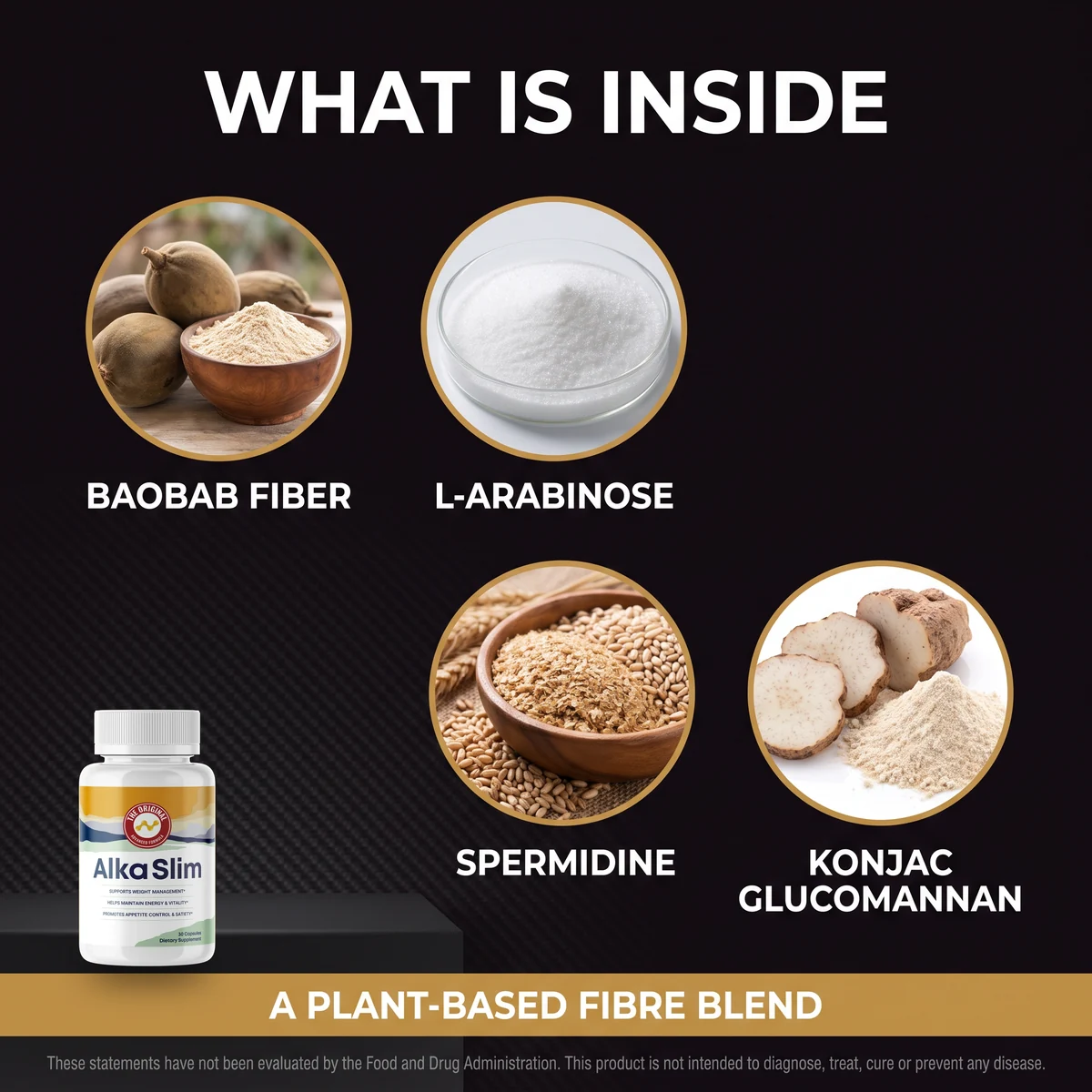
AlkaSlim is a once-daily fibre-led capsule with a 60-day money-back guarantee — long enough to test it honestly beside protein, movement and muscle rather than instead of them.
See the AlkaSlim OfferWhere supplements and thermogenics honestly fit
None of this means every ingredient is useless — it means the effects are small, and worth understanding for what they are. The best-studied thermogenic compounds are caffeine and the catechins in green tea. Caffeine produces a genuine but modest short-term rise in energy expenditure and can improve training performance, which indirectly helps if it lets you push a session harder. Green-tea extract shows a small effect in some trials and none in others. The honest summary is that these compounds nudge the smallest pieces of your daily burn, the body adapts as tolerance builds over a few weeks, and the numbers are easily wiped out by eating a little more than you think you have.
Fibre-led formulas like AlkaSlim work on a different mechanism entirely, and it is worth being precise about it rather than borrowing metabolism language it does not earn. Soluble fibre slows gastric emptying and promotes fullness, which can make a calorie deficit easier to hold. That is an appetite and comfort story, not a metabolic-rate story — and a product that stays in its lane is more trustworthy than one claiming to torch fat while you sleep. If your interest is genuinely in curbing hunger rather than chasing a thermogenic buzz, our guide to AlkaSlim Side Effects and Safety Checklist covers the mechanisms that actually help.
Three myths about metabolism boosters, and the objections behind them
Myth one: “A slow metabolism is why I can't lose weight.” True metabolic rates vary less between individuals than most people assume once body size is accounted for. Diagnosed thyroid conditions are a real medical matter for a doctor, but for the majority, a stubborn scale is driven far more by total intake — often underestimated — and activity than by a uniquely broken engine. The fix is rarely a booster; it is an accurate look at the calories going in and the movement going out.
Myth two: “Eating specific foods will spike my metabolism.” The much-repeated claims about chilli, celery, ice water and green tea are real in direction but tiny in magnitude — a handful of calories here and there, not a strategy. Protein is the one dietary choice with an effect large enough to matter, and even that is measured in a modest daily percentage, not a transformation. Chasing “fat-burning foods” is effort spent on the decimal points while ignoring the whole numbers.
Myth three: “If a booster is natural, it can't hurt and might help.” Natural is not a synonym for inert or safe. Stimulant blends can raise heart rate and blood pressure, disrupt sleep, and interact with medication; poor sleep in turn undermines the appetite regulation and training quality your results actually depend on. A supplement worth taking is one you can name a specific, evidence-based reason for — not one you take because the label implies more than it can deliver.
How AlkaSlim fits a metabolism-aware routine
Put the evidence together and a sensible plan almost writes itself, with supplements as the final, smallest layer rather than the foundation. Start with the levers that carry weight: build the day around adequate protein to raise the thermic effect of food and protect lean tissue; train against resistance to keep and grow the muscle that sets your resting rate; and move often outside the gym, because non-exercise activity is the quietly enormous variable most people ignore. Sleep well, because it governs the hunger you have to manage. Only then does a supplement have a job to do.
Within that hierarchy, a fibre-led formula has a defensible role: making the calorie deficit that drives fat loss easier to sustain by supporting fullness between meals. That is a supporting role, honestly described, and it is the one AlkaSlim is built for. It will not rewrite your metabolic rate, and any product claiming it can deserves your suspicion. Used as an accessory to protein, movement and muscle — and given a fair run inside its 60-day guarantee — it is a reasonable tool. Used as a substitute for the real levers, no metabolism booster ever earns its price. For many people the same appetite pressure shows up as evening snacking, which is why pairing the fibre with a plan for Gut Health Supplements Digestive Enzymes: Alpha-Galactosidase and Beans tends to matter more than any thermogenic ingredient on the label.
Related reading
Frequently asked questions
Do metabolism-booster supplements really work?
Only at the margins. No capsule rewrites your metabolic rate. The measurable effects of caffeine or green-tea catechins on energy expenditure are small, fade as tolerance builds, and are easily erased by eating a little more. A metabolism-booster supplement can support a sensible routine, but it cannot replace protein, movement and muscle.
What raises resting metabolism the most?
Muscle and daily movement. Lean mass is metabolically active tissue, so building and keeping it raises the calories you burn at rest more reliably than any pill. Add non-exercise movement — walking, standing, fidgeting — which varies enormously between people and can account for hundreds of calories a day.
Does protein burn more calories to digest?
Yes. This is the thermic effect of food, and protein has the highest of any macronutrient — roughly 20 to 30 percent of its calories are spent digesting and processing it, versus about 5 to 10 percent for carbohydrate and 0 to 3 percent for fat. Prioritising protein modestly raises daily energy expenditure.
Are thermogenic fat-burners worth it?
For most people, only slightly. Thermogenic fat-burners lean on stimulants that produce a small, temporary rise in energy expenditure and can blunt appetite. Tolerance builds within weeks, the metabolic effect is minor, and side effects like jitteriness or poor sleep are common. They are an accessory to diet and training, never a substitute.
Scientific references
- NIDDK, National Institutes of Health — Weight Management and energy balance
- Harvard T.H. Chan School of Public Health, The Nutrition Source — macronutrients and how the body uses them
- MedlinePlus (US National Library of Medicine) — Metabolism
- PubMed — The Thermic Effect of Food: A Review (J Am Coll Nutr, 2019)
Support your routine with AlkaSlim — on the right timeline
A once-daily fibre-led formula with a 60-day money-back guarantee. Put the real metabolism levers first, then let the supplement do its supporting job.
Get the AlkaSlim Offer