AlkaSlim Ingredients Breakdown
Quick Answer: What Is In AlkaSlim?
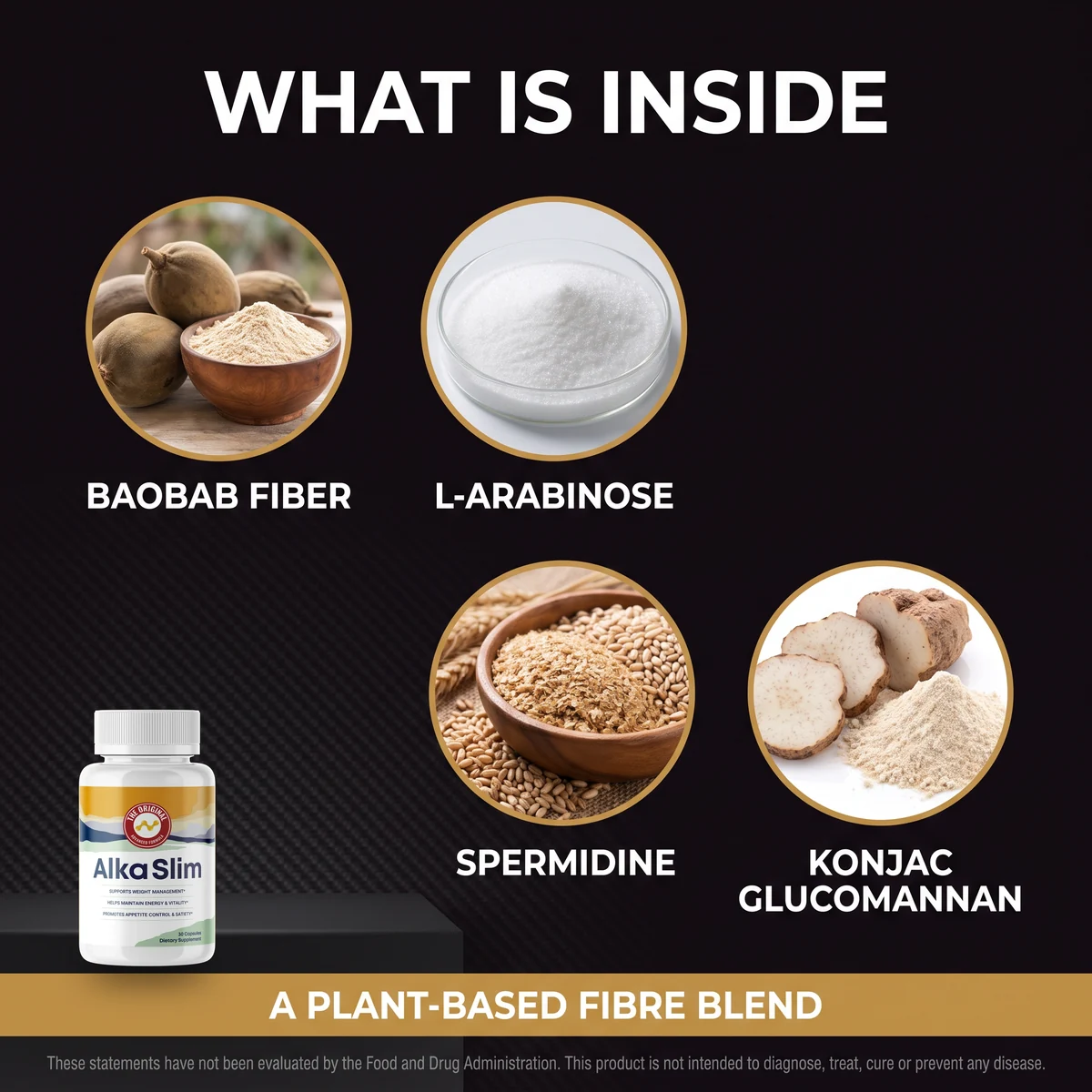
AlkaSlim names four actives on its label: konjac glucomannan, baobab fiber, L-arabinose and spermidine. Two of the four are soluble fibres and account for most of what anyone notices; L-arabinose is studied as a sucrase inhibitor, and spermidine is a longevity compound with no human weight-loss evidence behind it. No amount is published for any of the four, and there is no Supplement Facts panel. It supports weight management alongside diet; it is not a cure.
- Fibre first: konjac glucomannan and baobab fiber swell with water to blunt appetite between meals.
- Sugar handling: L-arabinose is studied as a sucrase inhibitor, acting on how sucrose is broken down.
- The odd one out: spermidine is studied for autophagy and cellular ageing, not for body weight.
- What is missing: every dose. The label names its actives and discloses no amounts at all.
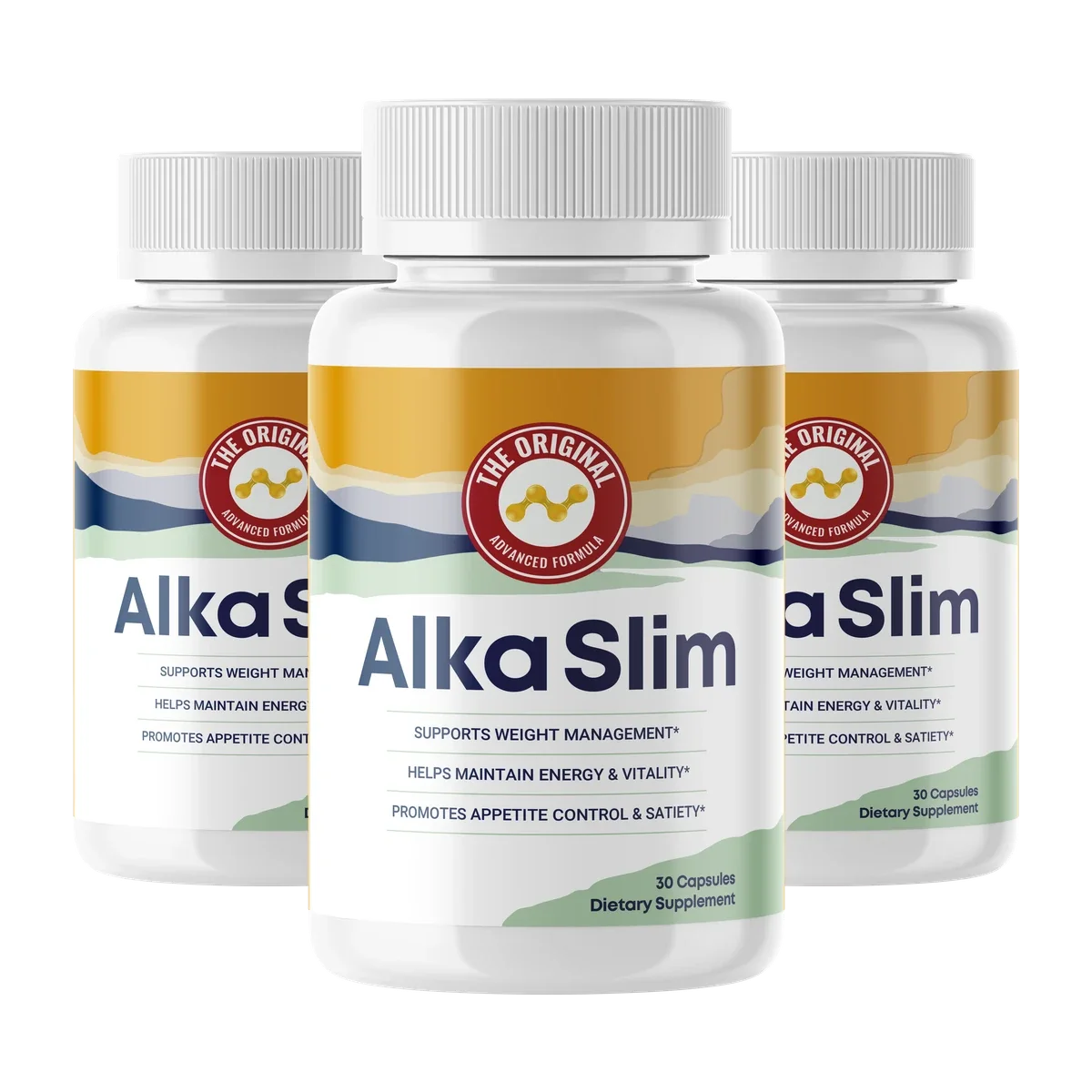
When you research a weight-management supplement, the single most useful thing you can do is stop reading the sales headline and start reading the label. This AlkaSlim ingredients breakdown does exactly that: it walks through every meaningful component in the formula, explains the mechanism in plain language, weighs the actual research, and tells you where the evidence is genuinely encouraging versus where the marketing runs ahead of the science. No hype, no invented studies — just a clear map of what you would be swallowing and why.
The reason this matters is simple. Two products with near-identical front-of-pack promises can contain completely different actives at completely different doses. A transparent label is one of the strongest trust signals a supplement can give you, and understanding the ingredients is how you decide whether AlkaSlim fits your goals or whether your money is better spent elsewhere. Let us open the bottle.
The full AlkaSlim ingredients list, grouped by job
AlkaSlim is best understood not as a random pile of botanicals but as four named actives doing three different jobs. The first job is appetite and fullness, and two ingredients share it: konjac glucomannan and baobab fiber, both soluble fibres. The second job is how a meal’s sugar is handled, and that falls to L-arabinose. The third is the outlier — spermidine, a polyamine studied for cellular housekeeping rather than for body weight. Framing the formula this way is more honest than listing everything as a generic “fat burner,” because each group has a distinct mechanism and a distinct level of evidence.
It is worth being upfront about two things before we go deeper. First, none of these ingredients is a weight-loss drug, and none of them melts fat on its own. What they do, at their best, is make a sensible calorie-controlled routine easier to stick to. Second, and more important: no amount is published for any of the four. There is no Supplement Facts panel for AlkaSlim, so everything below describes what an ingredient does in the research, not how much of it you are getting. That distinction matters most for the two fibres, because the trials behind them used gram quantities and a single capsule is a small vehicle.
Glucomannan: the viscous fiber that curbs appetite
Glucomannan is the star of the formula and the ingredient with the most straightforward case behind it. It is a soluble dietary fibre extracted from the root of the konjac plant, and its defining property is viscosity. When glucomannan meets water in your stomach, it absorbs many times its own weight and forms a thick, gel-like mass. That gel does two useful things: it physically fills space, which promotes a feeling of fullness, and it slows the rate at which the stomach empties, so that satisfied feeling lasts longer between meals. The practical upshot is that appetite is easier to manage, and a calorie deficit — the thing that actually drives fat loss — becomes less of a daily fight.
This is not a fringe claim. Glucomannan is one of the very few supplement ingredients to hold an authorised health claim in the European Union, which permits the statement that it "contributes to weight loss in the context of an energy-restricted diet." Read that wording carefully, because it is a model of honesty: the fibre helps in the context of eating fewer calories. It is a lever that makes the deficit easier to hold, not a substitute for the deficit. If you want the deeper mechanism on how soluble fibre influences the hormones that tell your brain you are full, our explainer on how fiber boosts GLP-1 satiety hormones naturally covers the pathway in detail.
Baobab fiber: the second fibre, and the one with human data on starch
Baobab is the fruit pulp of Adansonia digitata, a tree native to sub-Saharan Africa, and it is unusual among fruit powders in being roughly half fibre by weight, split between soluble and insoluble fractions. In the formula it plays a supporting role to glucomannan: more bulk, more viscosity, and a polyphenol content that glucomannan does not have.
The most relevant human work looked at exactly that polyphenol content. A controlled trial in Nutrition Research found that polyphenol-rich baobab fruit extract reduced starch digestion and the glycemic response to a starchy meal in healthy volunteers, an effect attributed to the polyphenols inhibiting digestive enzymes rather than to the fibre alone. That is a real finding in real people, and it is the strongest single piece of evidence behind baobab’s inclusion here. The caveat is the familiar one: that study used a measured quantity of extract, and AlkaSlim publishes no quantity at all.
L-arabinose: the sucrase inhibitor aimed at sugary meals
L-arabinose is a plant pentose sugar, usually sourced from corn or beet fibre, and it is the one ingredient in the formula aimed specifically at sucrose. Rather than adding bulk the way the two fibres do, it acts on the enzyme sucrase in the small intestine, slowing the step that splits table sugar into glucose and fructose for absorption.
The mechanism is well characterised in humans. Dose-response work published in the American Journal of Clinical Nutrition established how L-arabinose inhibits intestinal sucrase activity, in vitro and in people, and a later randomised crossover trial in the British Journal of Nutrition found that co-ingesting L-arabinose delays the glucose absorption derived from sucrose. Both are genuine human studies. Both also used stated doses, typically a few grams alongside a sucrose load, and again we cannot tell you what AlkaSlim contains. If your problem meals are sugary rather than simply large, this is the ingredient in the formula with your name on it.
Spermidine: the ingredient with the weakest weight-loss case
Spermidine is a polyamine, commonly extracted from wheat germ, and it is the ingredient on this label we would flag hardest. It is a genuinely interesting compound: it is studied for autophagy, the cellular recycling process, and a well-known paper in Nature Medicine reported cardioprotection and lifespan extension by the natural polyamine spermidine, largely in animal models with supporting human epidemiology.
What does not exist is human trial evidence that supplemental spermidine causes weight loss. The small human studies that have been run looked at memory and cognition, not body composition. So spermidine is on the label, we list it because it is on the label, and we will not pretend it is the reason the formula could work. It is not. The fibre is.

See the full formula and the current offer
AlkaSlim is a once-daily, fibre-led capsule backed by a 60-day money-back guarantee — enough time to judge the formula honestly against your own routine.
See the AlkaSlim OfferWhat AlkaSlim does not contain, and why people expect it to
Search results for this product are crowded with pages describing a berberine-and-digestive-enzyme formula. That is not what the AlkaSlim label says, and it is worth correcting plainly, because buying a supplement for an ingredient it does not contain is the most avoidable mistake in this category.
There is no berberine in AlkaSlim. Berberine is a real compound with a real research base around AMPK and insulin sensitivity, and it is the ingredient behind the viral “natural Ozempic” nickname — a comparison we pick apart in our piece on whether berberine really is nature’s Ozempic, with practical figures in our guide to berberine dosage and a realistic timeline. If berberine is what you are after, buy berberine. You will not get it here.
There are no digestive enzymes in AlkaSlim either. No lactase, no lipase or ox bile, no alpha-galactosidase. Those are useful compounds with specific jobs, and each has its own honest case: lactase for dairy digestion if milk sugar is your trigger, ox bile and lipase after fatty meals if fat sits heavily, and alpha-galactosidase for the gas that beans and brassicas cause. None of them is in this bottle, and none of them will arrive with it.
This matters practically, not just pedantically. Adding a lot of soluble fibre to your day can cause gas and bloating for a fortnight while your gut adapts, and an enzyme blend is exactly the sort of thing that would help with that. AlkaSlim does not include one. If the first two weeks are rough, the levers you actually have are a gradual ramp-up and more water — not an ingredient the label never promised.
| Ingredient | What it does | Honest role in weight management |
|---|---|---|
| Konjac glucomannan | Forms a viscous gel; slows gastric emptying | Curbs appetite so a calorie deficit is easier to hold. Best-evidenced ingredient here. |
| Baobab fiber | Adds soluble and insoluble bulk; polyphenols slow starch digestion | Supports the fibre effect; human data on glycemic response to starch |
| L-arabinose | Inhibits intestinal sucrase | Blunts the sugar hit from sucrose specifically; no direct weight-loss data |
| Spermidine | Polyamine studied for autophagy and cellular ageing | No human evidence for weight loss. On the label, not a reason to buy. |
Is there clinical research behind AlkaSlim's ingredients?
Here is where honesty separates a useful review from a sales page. The correct answer is nuanced: the individual ingredients are researched, but the specific finished AlkaSlim blend has not, as far as we can find, been the subject of its own published clinical trial. Those are two different claims, and conflating them is one of the most common tricks in the supplement industry.
On the ingredient level, the evidence is real. Glucomannan has multiple human trials examining satiety and modest weight change, plus the authorised EU health claim already mentioned — a genuinely high bar. Berberine has a large body of clinical work on glucose metabolism and insulin sensitivity, which is why it is taken seriously in metabolic-health circles. The digestive enzymes are among the best-characterised compounds in all of gastroenterology; there is no mystery about what lactase or alpha-galactosidase does. So the building blocks stand on solid ground.
What you should not assume is that combining researched ingredients automatically produces a researched product, or that the doses in any given capsule match the doses used in the studies. Dose is everything. This is why we always encourage readers to check the exact milligram amounts on the label against the amounts used in trials, rather than trusting that "contains glucomannan" means "contains a studied dose of glucomannan."
Are AlkaSlim's ingredients natural and safe? Three common objections
Objection one: "Natural means it's automatically safe." This is the most important myth to retire. The AlkaSlim ingredients are plant- and food-derived and are generally well tolerated, but "natural" and "risk-free" are not synonyms. Glucomannan in particular must always be taken with a full glass of water, well before you lie down, because a viscous fibre that expands can pose a choking or obstruction risk if swallowed dry or with too little fluid. That is a real, documented caution — not a reason to avoid the ingredient, but a reason to follow the directions exactly.
Objection two: "If a little is good, more must be better." Not with these ingredients. Berberine can lower blood sugar and interacts with a number of medications, so stacking extra on top of the formula is genuinely unwise, especially for anyone on glucose-lowering or blood-pressure drugs. Fibre, too, has a comfortable ceiling; ramping up too fast is the fastest route to the very bloating the enzymes are there to prevent. Respect the label dose.
Objection three: "A supplement can replace the diet." It cannot, and any product implying otherwise deserves suspicion. The most defensible way to read this entire formula is as a set of tools that make a calorie-controlled, higher-protein, higher-fibre diet easier to sustain. Used that way, the ingredients earn their place. Used as an excuse to skip the diet, no ingredient in any bottle will save the plan. If you are also weighing tolerability, our overview of how natural appetite suppressants work puts these mechanisms in wider context.
How to read the AlkaSlim label like a skeptic
Put all of this together and you have a simple checklist for judging not just AlkaSlim but any supplement in this category. First, look for named ingredients with disclosed doses rather than a vague "proprietary blend" that hides how much of anything you are getting. Second, match those doses against the amounts used in research where you can. Third, be clear about which ingredients do which job — appetite, metabolism, or comfort — and check that the product's marketing stays inside what the ingredients can actually deliver. Fourth, factor in the guarantee: a genuine money-back window gives you a low-risk way to test tolerability and real-world effect on your own body, which is ultimately the only trial that matters to you.
Judged on that checklist, AlkaSlim's formula is coherent and honestly scoped: a fibre core with a credible appetite mechanism, a metabolic support ingredient with real research, and an enzyme blend aimed squarely at the comfort problem that sinks most diets. It supports weight management as part of a sensible routine — and that, stated plainly, is exactly what a supplement should claim to do.
Related reading
Frequently asked questions
What are the active ingredients in AlkaSlim?
Four are named on the label: konjac glucomannan, baobab fiber, L-arabinose and spermidine. Glucomannan and baobab are both soluble fibres and do most of the work you would notice; L-arabinose is studied as a sucrase inhibitor; spermidine is a polyamine studied for autophagy rather than for body weight. No amount is published for any of the four, and there is no Supplement Facts panel.
Does AlkaSlim contain berberine or digestive enzymes?
No. Several pages online describe AlkaSlim as a berberine-and-enzyme formula, and that does not match the label. There is no berberine, no lactase, no lipase or ox bile and no alpha-galactosidase in this product. If you want any of those, buy them as their own supplement rather than expecting them in this bottle.
Is there clinical research behind AlkaSlim's ingredients?
The individual ingredients are researched, though not this exact finished product. Glucomannan has meta-analysed human trials on satiety and modest weight change and holds an authorised EU health claim in a calorie-controlled diet. Baobab has human data on starch digestion and glycemic response, and L-arabinose has human dose-response work on sucrase. Spermidine has no human weight-loss evidence. Ingredient evidence is not the same as a trial of the branded product, and no trial of AlkaSlim itself has been published.
Are AlkaSlim's ingredients natural and safe?
The ingredients are plant- and food-derived and are generally well tolerated, but natural does not mean risk-free. Glucomannan must be taken with plenty of water to avoid choking or blockage, and it is the ingredient with a genuine safety instruction attached. Both fibres can cause gas and bloating for a week or two while your gut adapts. Spermidine is commonly extracted from wheat germ, which matters if you avoid wheat. Anyone pregnant, nursing, on medication or managing a condition should speak to a doctor or pharmacist first.
How much of each ingredient does a capsule contain?
Nobody outside the manufacturer knows. AlkaSlim publishes no Supplement Facts panel, so the four actives are listed by name and by nothing else. That gap matters most for the two fibres, because the trials behind them used gram quantities and a single capsule is a small vehicle. Treat the ingredient list as an ingredient list, not as a dose.
Scientific references
- NIH Office of Dietary Supplements — Dietary Supplements for Weight Loss (fibre and botanicals)
- EFSA — Scientific Opinion on the substantiation of a health claim for glucomannan and weight reduction
- PubMed — The effect of berberine supplementation on obesity parameters, inflammation and liver function enzymes: a systematic review and meta-analysis of randomized controlled trials (Clin Nutr ESPEN, 2020)
- MedlinePlus (US National Library of Medicine) — Digestive enzymes and how they work
Ready to try the formula for yourself?
Now that you know what every AlkaSlim ingredient does, see the current pricing and the 60-day money-back guarantee at the official store.
Get the AlkaSlim Offer